A community study on the mental health, identity and migratory heritage of young Quebecers of Maghreb origin (ages 15 to 29), a collaborative research project led by CEAMQ with researchers from McGill, Université de Montréal, Laval, Ottawa and UQAM.
In Quebec, young people of Maghreb origin live at the crossroads of several cultural reference points. This study gives a voice to realities that are often rendered invisible.
The identity-related, psychological and social challenges experienced by young people of Maghreb origin remain largely overlooked by existing studies and public policies in Quebec.
A study led by CEAMQ with researchers from five universities, McGill, Montréal, Laval, Ottawa and UQAM, for scientific rigour and a strong grounding in the field.
An anonymous 5-minute questionnaire and semi-structured interviews to gather the voices of those who live these realities every day, without judgment or identification.
The end goal: produce solid evidence and actionable recommendations for institutions, organizations and decision-makers in matters of prevention and inclusion.
The Silent Voices study examines the lived realities of young Quebecers of Maghreb origin, particularly around mental health, identity, sense of belonging and relationships with institutions. It aims to document experiences that remain underrepresented, in order to inform public policies, intervention practices and community action.
In a Quebec shaped by cultural diversity and significant demographic transformations, these young people, born here or from recent immigration, live at the crossroads of several reference points: family heritage, Quebec values, academic expectations and social pressures. These trajectories can be marked by identity tensions, stigmatization, inequalities and a sense of exclusion, with possible effects on well-being, educational paths and social integration.
The study features a research approach grounded in the field, a mixed methodology, anonymous data-collection tools, and an explicit commitment to producing concrete recommendations to strengthen prevention, inclusion and social cohesion in Quebec.
Five structuring objectives guide this research, from documenting realities on the ground to formulating concrete recommendations.
Document the lived realities of Quebecers of Maghreb origin across different areas of daily life.
Produce rigorous data on issues related to mental health, identity, inclusion and migratory journeys.
Analyze perceptions of institutions, the effects of discrimination, and factors of resilience or disengagement.
Inform public policies and community action with results grounded in the field.
Formulate recommendations capable of strengthening prevention, inclusion and the adaptation of professional practices.
The study structures its analysis around six complementary areas covering psychological, identity-related, institutional and community dimensions.
The study combines quantitative and qualitative data for a nuanced understanding of the realities young people experience.
Quantitative and qualitative data drawn from a self-administered questionnaire and semi-structured interviews.
Volunteer youth, parents and professionals; expertise from researchers associated with McGill, Montréal, Laval, Ottawa and UQAM.
March 2025 to April 2026, a timeline structured into methodological stages including data collection, analysis and dissemination.
A combination of comparable, quantifiable data with an in-depth exploration of individual experiences, narratives and contexts.
A scientific and ethics committee oversees the entire protocol. Data collection is 100% anonymous: no first name, last name, email, identifier or IP address is collected.
The parameters that illustrate the scope and ambition of this participatory research.
Five structuring observations that shed light on the realities of young Quebecers of Maghreb origin.
Young Quebecers of Maghreb origin live at the crossroads of several reference points, family heritage, Quebec values, social pressures, creating complex identity trajectories that remain largely undocumented.
Stigmatization, inequalities and a sense of exclusion can have profound effects on the psychological well-being, educational paths and social integration of these young people.
A mixed methodology combining an anonymous self-administered questionnaire with semi-structured interviews, overseen by a rigorous scientific and ethics committee.
A collaborative research project involving researchers from five major Quebec universities: McGill, Université de Montréal, Université Laval, University of Ottawa and UQAM.
Produce concrete recommendations to strengthen prevention, inclusion and the adaptation of professional practices for young people of Maghreb origin in Quebec, for the benefit of institutions, organizations and the community.
The outcomes of this study are intended as much for the young people directly concerned as for decision-makers, professionals and organizations in the field.
A better understanding of the social, identity-related and psychological realities experienced by young people of Maghreb origin
Guidance for public policies through contextualized, evidence-based data
Improved intervention practices in schools, social services, health care and community organizations
Decision-making support for institutions called upon to act on inclusion, prevention and access to resources
Development of tailored solutions based on the real needs revealed by the research
CEAMQ offers accessible, caring support to Maghrebi individuals and families facing difficulties in Quebec. It provides empathetic listening, effective referral to the right resources and personalized guidance to strengthen autonomy. The Silent Voices program is part of its participatory research approach in the service of youth well-being and social cohesion.
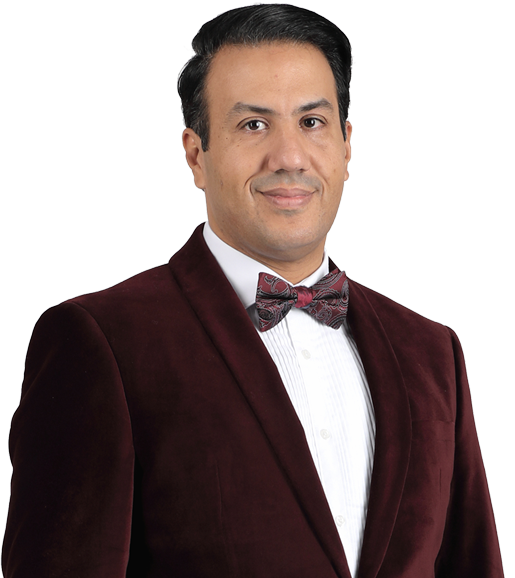
Study director · Listening and Support Centre for Maghrebis in Quebec
A researcher dedicated to analyzing social, family and migratory dynamics in Quebec, El Amine SERHANI leads this study with a rigorous, human and action-oriented approach. His expertise combines field research with strategic vision in the service of communities.
✉ etude@ccmq.orgWhether you are a young person concerned, a parent, a front-line worker, a researcher or a professional, your contribution enriches our understanding of the realities young people experience in Quebec.