Social analysis · 2026 update

Between breakup and rebirth

Divorce and blended families in the Maghreb community in Quebec: understanding the causes, identifying the obstacles and opening the way to more stable and more serene paths to rebuilding.

Discover the study

Why this study is essential

In Quebec, some Maghreb families experience marital breakdowns embedded in complex migration journeys. This study sheds light on a reality that often goes unseen.

🌍

A distinctive migration context

The redefinition of marital roles, gaps in cultural adaptation, social isolation and economic pressures amplify family vulnerabilities after migration.

🔒

Obstacles to rebuilding

The lack of transparency between potential partners, the tax effects of remarriage and the fear of legal consequences hold people back from committing to a new married life.

👥

A social and community lens

The study adopts a relational and contextual reading to better understand these obstacles and identify tailored responses that are useful to the community and to Quebec institutions.

💡

Paths forward

Fostering relationships that are more transparent, more balanced and better protected in Quebec, for families, practitioners and decision-makers.

Overview of the study

This study examines divorce, separation and paths to family recomposition in the Maghreb community in Quebec. It sheds light on a reality that often goes unseen, marked by marital tensions, shifting family roles, cultural pressures, economic vulnerabilities and legal or relational obstacles.

It is intended for decision-makers, community workers, researchers, families and institutions seeking to better understand the transformations under way. It offers a structured reading of the causes of divorce, the barriers to couples rebuilding their lives, support needs, along with concrete avenues for fostering relationships that are more transparent, more balanced and better protected in Quebec.

Decision-makers Community workers Researchers Families Institutions

What this study aims to accomplish

Five structuring objectives guide this research, from documenting realities on the ground to formulating concrete recommendations.

01

Document the dynamics of divorce and separation in the Maghreb community in Quebec.

02

Measure the extent of the social, economic, cultural and legal barriers to family recomposition.

03

Analyze the effects of migration-related transformations on marital, parental and family roles.

04

Shed light on the real needs of divorced individuals, single-parent families and blended families.

05

Recommend support, mediation, safeguarding and assistance mechanisms better suited to the Quebec context.

Six dimensions explored in depth

The study structures its analysis around six complementary lines, covering marital, cultural, economic, legal and community dimensions.

Axis 01

Marital and family transformations in a migration context

Axis 02

Cultural, family and religious pressures surrounding divorce

Axis 03

Obstacles to the recomposition of couples and families

Axis 04

Economic, tax and social impacts of remarriage

Axis 05

Legal and administrative issues and feelings of relational insecurity

Axis 06

Community needs in mediation, verification and lasting support

A rigorous approach grounded in the field

The study combines qualitative analysis, thematic reading and contextual grounding for a nuanced understanding of social and relational realities.

📋

Type of data

Qualitative data, contextual analysis and thematic reading of social and relational realities.

📚

Sources used

Analytical content, field observations, marital issues, legal, economic, cultural and community dimensions.

📅

Period covered

The contemporary situation in Quebec, with a view to a 2026 update.

🔬

Approach

Mainly qualitative, with an analytical and operational focus. Potential for quantitative enrichment.

⚠️

Identified limitations

Absence of consolidated statistical data in the base document. Need to supplement the analysis with surveys, interviews or institutional data.

The study's major findings

Six structuring observations that shed light on the realities of divorce and family recomposition.

Key finding

Divorce is a silent crisis affecting a significant portion of the Maghreb community in Quebec, often poorly documented and insufficiently supported.

Trend

Marital breakdowns occur against a backdrop of role redefinition, growing autonomy, culture shock and post-migration social isolation.

Major issue

Family recomposition is held back by a lack of transparency, mistrust and the absence of reliable mechanisms to safeguard these journeys.

Point of vigilance

Tax impacts, the potential loss of benefits and the financial consequences of remarriage can discourage the building of a new household.

Social risk

Fear of legal repercussions or accusations within the marital context can hold people back from committing to a new stable, lasting relationship.

Flagship recommendation

Develop integrated mechanisms combining legal information, mediation, relationship support, profile transparency and long-term assistance.

A concrete and lasting impact

The outcomes of this study are designed to reach the families directly concerned as much as decision-makers and professionals in the field.

✓

Better understanding of the realities of divorce and family recomposition in the Maghreb community

✓

Sharper direction for public policies and interventions in family and social matters

✓

Increased support for community stakeholders and professionals in the field

✓

Support for decision-making by families, institutions and accompanying organizations

✓

Development of concrete, culturally adapted and lasting solutions for families in transition

A committed institution rooted in Quebec
Council of the Maghreb Community in Quebec

The Council of the Maghreb Community in Quebec is an organization with a social, cultural and analytical mission, committed to understanding the realities experienced by the Maghreb community. It works to advance intercultural dialogue, produce useful knowledge and support family, identity and social transitions in the Quebec context.

Study director

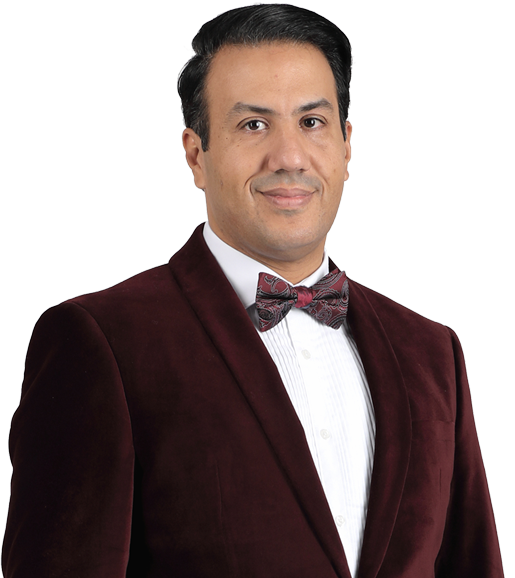
El Amine SERHANI

El Amine SERHANI, Ph.D.

Study Director · Council of the Maghreb Community in Quebec

A researcher devoted to analyzing social, family and migration dynamics in Quebec, El Amine SERHANI leads this study with a rigorous, human and action-oriented approach. His expertise combines field research and strategic vision in the service of communities.

✉ etude@ccmq.org

Your voice matters in this study

Whether you are someone directly affected, a community worker, a researcher or a professional, your contribution enriches the understanding of family realities in Quebec.

All studies